
The Social Education of Women
Les liaisons dangereusesThis thread traces how convent schooling, family authority, and worldly manipulation shape the women’s unequal preparation for society.
increasing Bearing strength in each event
 decreasing
Bearing strength in each eventdecreasingConvent Education

Instruction in Seclusion
Cécile’s Formation
Cécile has been educated in a convent and emerges without practical understanding of courtship or sexual politics. Her schooling has not prepared her to recognize manipulation.
A Social Expectation
The convent is both a place of instruction and a holding space before marriage. The novel questions what kind of education leaves a young woman so dependent on others.
Merteuil’s Self-Education

Learning Outside the Lesson
Observation
Merteuil uses the silence imposed on girls to study conversation, expression, and power. She develops her own training in concealment and judgment.
An Unequal Outcome
Her education gives her unusual control, but not a benevolent moral framework. The contrast with Cécile shows that knowledge can protect or corrupt depending on its purpose.
The Older Woman’s Curriculum

Merteuil Teaches Cécile
Books and Confidence
Merteuil offers reading and advice while instructing Cécile to hide matters from her mother. Cécile interprets correction as proof of affection.
A Corrupting Syllabus
The lessons teach Cécile to manipulate appearances without understanding the dangers involved. Education becomes a means of access and control.
The Mother’s Late Learning

Reconsidering Maternal Authority
New Evidence
Madame de Volanges learns that her daughter’s distress is deeper than youthful disappointment. She allows Cécile to remain at the convent rather than enforce the planned marriage.
Limits of Authority
Her care is sincere but delayed. The story contrasts authority that controls a daughter with support that takes her suffering seriously.
A Choice Made After Harm
Education’s Aftermath
Postulancy
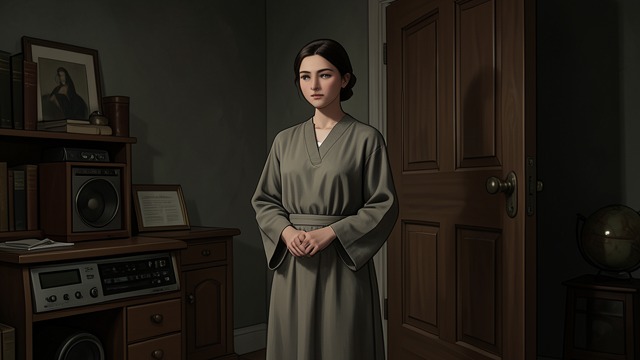
Cécile begins life as a postulant after the events that have exposed her to manipulation and grief. Her choice may reflect vocation, refuge, or both.
An Unsettled Judgment
The conclusion refuses to present her path as a simple triumph or failure. The larger question remains whether society gave her the knowledge and protection needed to choose freely.
Before the main events
Adolescence
August to October
December
January
